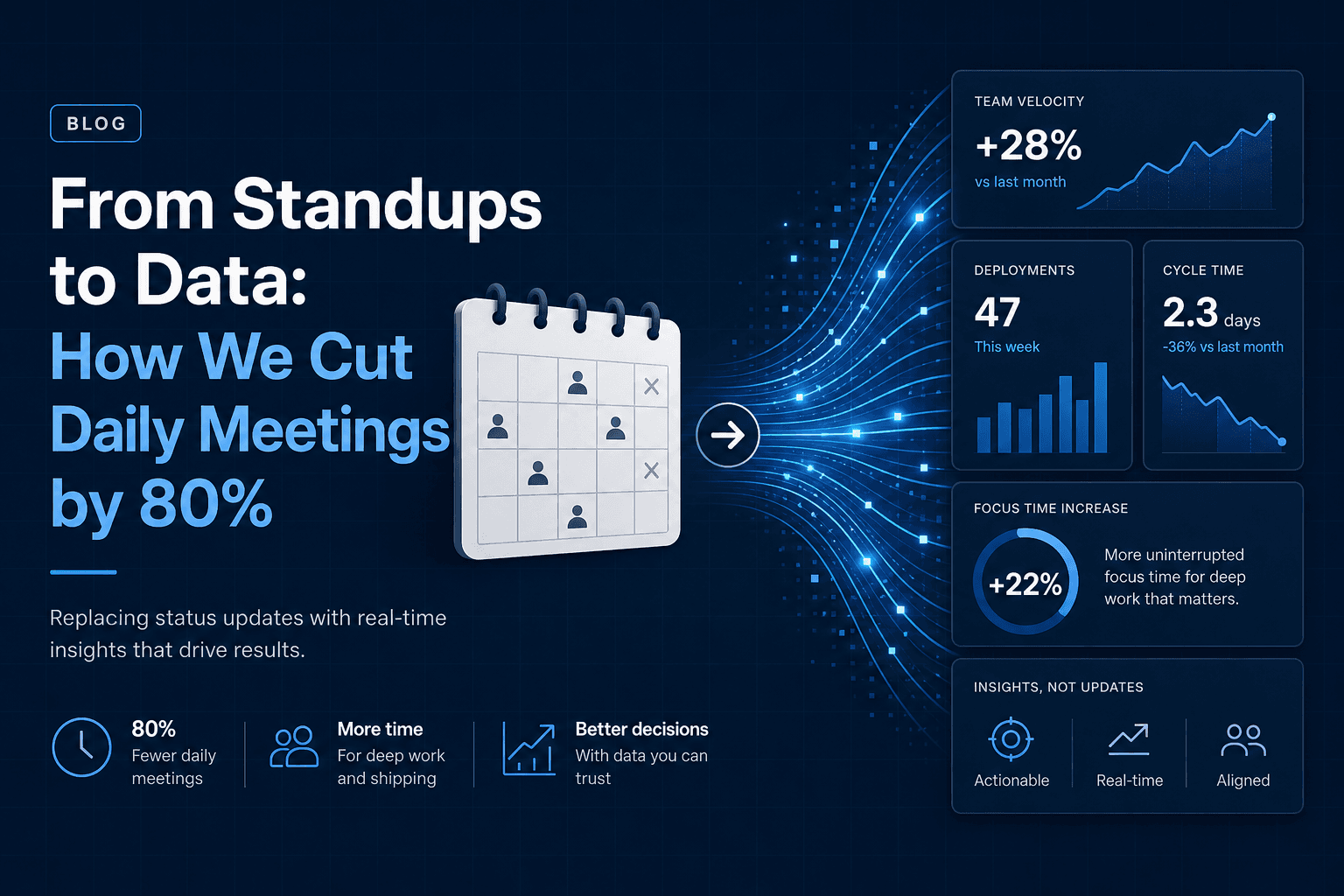
The Standup Trap
Every engineering team I've led has had the same ritual: 9 AM standup, 12 people, 45 minutes. By the time the meeting ends, half the team has forgotten what was said, and the other half is already back in their IDE pretending nothing happened.
The problem isn't the meeting format. The problem is that standups exist to answer one question: "What's actually going on?" And the uncomfortable truth is that if you need a daily meeting to answer that question, your observability is broken.
What We Replaced It With
After joining a fintech startup as CTO in early 2023, I proposed an experiment: no standups for 30 days. Instead, we'd let data speak.
We instrumented three layers:
The dashboard we built was dead simple: one view showing where each in-flight piece of work was, color-coded by health (green / yellow / red).
The Numbers After 30 Days
| Metric | Before | After |
|---|---|---|
| Daily meeting time | 45 min | 5 min (async check-in) |
| Avg PR review time | 3.2 days | 1.4 days |
| "Surprise" blockers in planning | 8/sprint | 2/sprint |
| Engineer-reported focus time | 3.1 hrs/day | 4.8 hrs/day |
What Actually Changed
The biggest shift wasn't the meeting time — it was the quality of conversations. When we did sync (twice a week, 20 minutes), we came with specific questions: *"This PR has been in review for 4 days, what's the blocker?"* instead of *"So, what are you working on?"*
Developers stopped dreading the calendar notification. Managers stopped feeling like they were flying blind.
The Two Things That Can Go Wrong
1. Data without context. A commit at 11 PM isn't inherently good or bad. You need to understand what's normal for your team before you start drawing conclusions.
2. Surveillance vs. observability. We were explicit from day one: this data is for the team, not for HR. Engineers could see their own metrics first, and nothing went to exec dashboards without team-level aggregation.
Conclusion
Daily standups solve a visibility problem, but they do it expensively — in calendar time, context switches, and the psychological cost of "performing" productivity. If you can get visibility from data, you can give those 45 minutes back to the people doing the actual work.
Start small: pick one metric (PR age is a good first one) and make it visible to the whole team. See what conversations it creates. The standups will start canceling themselves.